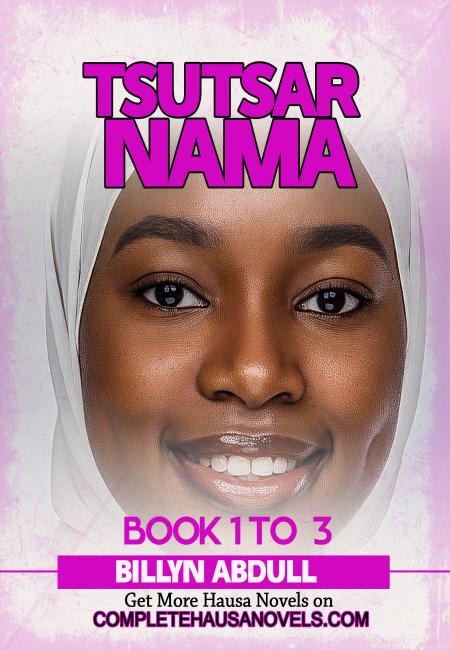
Hmm... So, Billyn Abdull, or rather, reflecting on what the past years up until today have taught me, I can say that courage is the essence of life. Patience is what guides every living being to breathe and survive in peace. Whenever people ask us, "What is our beauty?" The first answer we often look for is in our hearts, and we say (upbringing). But for me, I don't entirely agree. I can also say, slowly and firmly, even if my answer might stir disagreement or debate. Don't be surprised or take my words based on strict personal opinion or assume I'm being speculative. I don't believe upbringing alone defines beauty—truthfully, religion is the highest form of beauty and the pinnacle of adornment in this world. And then, it's up to you and everyone else. I stand by this belief because I hold my religion above all else—it answers everything in my life.
This world is the first school for every living soul, where we strive with perseverance to seek the reward of the hereafter. However, the way you navigate it determines your worth and value in everything and in everyone's eyes. Every living being fears death, but that doesn't stop the desire for life and the hope of entering Paradise, because there, one can attain everything beyond what the heart can imagine—even beyond the length of endless highways. Likewise, the end of our days in this world doesn't prevent us from securing our provisions, even if our struggles are meant to spread our legacy.
Every human you see—life plays its role based solely on what is written in their book of destiny. No matter how hard you strive, whether chasing the world or running from it, you cannot escape what has been decreed for you.
I won't take you too far back, but last year, I opened up to you in a way that would help you better understand what I want to say to Billyn Abdull and all of you. My name is Samraah Abdul-Wahab Gwarzo. In reality, I am no one special—just the daughter of Malam Abdul-Wahab Gwarzo. My father wasn't a man of power, nor was he wealthy or a great scholar. He was simply a driver working for a wealthy family. But Allah took him in a car accident when I was just seven years old. He left behind only three of us—him, our mother, and then Allah also took her after giving birth to my younger sibling before she even turned three. Yaya Musaddiq is our eldest brother, then me (Samraah), and our youngest, Hafizzullah.
After our mother's passing, the care of me and Hafizzullah fell to our maternal uncle, Uncle Imam. His wife breastfed Hafizzullah alongside her own son, who was born around the same time as our mother's passing—though we're not entirely sure if she actually breastfed him or not. So, they grew up almost like twins. After our father's death, Yaya Musaddiq also returned to Uncle Imam's care.
Though our father wasn't rich or influential, he left us with inherited farmlands and a home. There was also some money in an account. Our mother also left us farmlands inherited from her parents, shared with Uncle Imam—since they were the only two children of their parents. Since all our parents were from Gwarzo town, all our inherited properties are there. The only house we lived in was here in Kano city.
Because we were so young, everything our parents left for us wasn't given to us directly. Uncle Imam said we had to grow up first, so he took control of everything—he continued farming the lands and rented out the house. Uncle Imam was the one who took responsibility for our education and all aspects of our lives until we grew up.
Though life in Uncle Imam's house was never easy for us because of his wife's harsh behavior—we endured it silently. But surely, we tasted the bitterness of our own money being controlled by her in different ways. We faced various challenges of neglect. Whatever they did for their own children was different from what was done for us. Even with food, she would favor her children over us. Even in school—they attended private school, while we went to government school. Their clothes were always different from ours. Even their bedroom was separate from ours.
What might shock you is that I believe this discrimination wasn't just from her—it was also from Uncle Imam himself. Before we realized our own worth, we cried and wiped our tears, and after...